Searching USDA Organic Integrity Database...
Why Verify Before You Buy?
Fake Labels Are Everywhere
Thousands of Amazon products display the USDA Organic seal without any certification on record. In our testing, 5 out of 10 "organic" products had no verifiable certification in the USDA database. The seal is easy to print on a label, verifying it takes seconds.
Handlers Outnumber Farmers
For many organic products, there are only a handful of certified farms worldwide but hundreds of companies selling them as "USDA Organic." Most handlers simply import and repackage without verifying whether their source farm's organic certificate is still active. Farms need annual certification too, and many let it lapse.
One Organic Item, Seal on Everything
Some brands have just one certified organic product but use the USDA seal across their entire product line. Without checking each product individually against the database, consumers have no way to know which items are actually certified.
Be the First Line of Defense
With over 77,000 operations and 742,000 certified products in the USDA database, enforcement resources can't keep up with every listing on Amazon. Organicate puts the power to verify in your hands, paste an Amazon URL and know in seconds.
What We Check
Certification Status
Is the brand currently certified, surrendered, suspended, or revoked in the USDA database?
Renewal Dates
When was the last annual renewal? Organic certification must be renewed yearly. Gaps are red flags.
Source Location
Where is the operation located? Many products claim US origin but source from overseas farms.
Certifier Verification
Which certifying agent issued the certificate? Is it a USDA-accredited certifier?
Verify Amazon Products
Paste any Amazon product URL and we instantly extract the brand and product, then cross-reference it against the USDA database.
Organic Trust Score
Is the product certified as 100% Organic, Organic (95%), or Made with Organic (70%)? Products with no organic grade are flagged.
How Annual Organic Certification Works
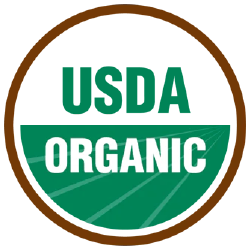
Under USDA regulations, organic operations must be inspected and re-certified annually. A certified organic operation receives an anniversary date marking when their next annual update is due. If a farm was certified organic years ago but hasn't renewed since, they cannot legally use the USDA Organic seal. For products sourced from India, operations must hold dual certification under both India's National Programme for Organic Production (NPOP) and the USDA's National Organic Program (NOP). Both need to be current.
What Are The USDA Organic Labeling Categories
100% Organic
Every ingredient must be certified organic (excluding salt and water, which are considered natural). These products can display the USDA Organic seal.
Organic (95%+)
The product must contain at least 95% certified organic ingredients. The remaining 5% must be non-GMO and appear on the National List of approved substances.
Made with Organic (70%+)
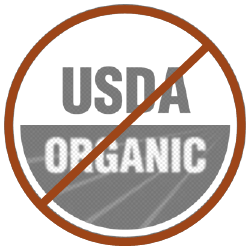
The product must contain at least 70% certified organic ingredients. The USDA Organic seal cannot be used on these products, but the product still must be certified.
The $5,000 Exemption Loophole
Under current USDA rules, operations that gross less than $5,000 per year in organic sales are exempt from certification. They can label their products "organic" without any inspections, audits, or oversight from a certifying agent. While they are still required to follow all organic production standards, there is no verification process in place to confirm that they actually do. However, these exempt operations CANNOT use the USDA Organic seal.
Who Needs USDA Organic Certification

 USDA Organic Seal is valid on this product




Every link in the supply chain must be independently certified.
Even if the original farm is fully USDA Organic certified, any company that repackages, relabels, or sells that product under their own brand must hold their own handler certification. Without it, using the USDA Organic seal is a federal violation. This is one of the most common issues found on Amazon, where sellers source from certified farms but lack their own certification.